


Published
10-03-2026
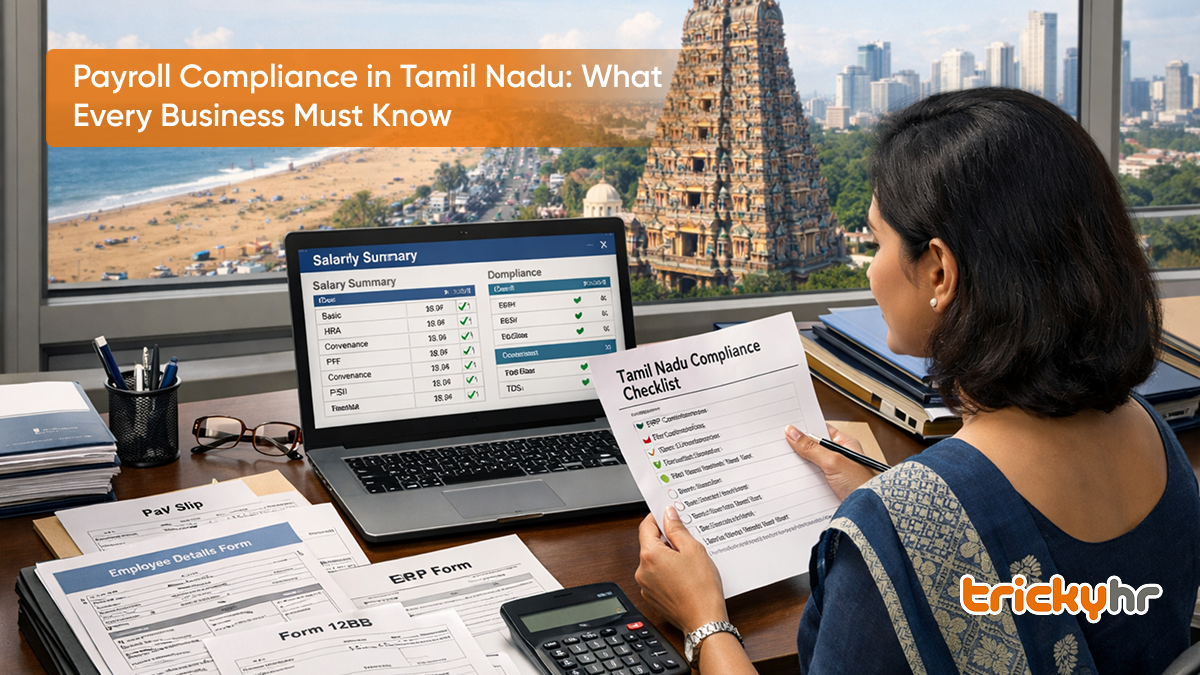
Payroll Compliance in Tamil Nadu: What Every Business Must Know
Payroll compliance is a critical responsibility for every business operating in Tamil Nadu. From salary calculations and tax deductions to statutory contributions and employee benefits, organizations must ensure that payroll processes follow legal and regulatory requirements. Failure to comply with payroll regulations can lead to penalties, financial losses, and legal complications. This is why many organizations today rely on payroll management software in Tamil Nadu to ensure accurate payroll processing and compliance. In this blog, we will explore the key aspects of payroll compliance and how businesses can manage it effectively.
What Is Payroll Compliance?
Payroll compliance refers to following all government rules and statutory requirements related to employee salary payments, tax deductions, and employee benefits.
For businesses in Tamil Nadu, payroll compliance includes:
- Accurate salary calculations
- Income tax deductions
- Provident Fund (PF) contributions
- Employee State Insurance (ESI) contributions
- Professional tax deductions
- Payslip and salary record maintenance
Maintaining proper compliance ensures transparency between employers and employees while protecting the organization from legal risks.
Key Payroll Compliance Requirements in Tamil Nadu
1️ Provident Fund (PF)
The Employees’ Provident Fund (EPF) is a mandatory retirement savings scheme for eligible employees.
Employers must:
- Deduct PF contributions from employee salaries
- Contribute the employer share
- Submit PF returns on time
Automated payroll and HR management software helps organizations manage PF calculations and reporting efficiently.
2️ Employee State Insurance (ESI)
ESI provides health insurance benefits to employees earning within the eligibility limit.
Employers must:
- Deduct ESI contributions from employee salaries
- Contribute the employer share
- Submit monthly ESI reports
Accurate payroll systems help maintain compliance and avoid calculation errors.
3️ Professional Tax
Professional tax is a state-level tax applicable to employees working in Tamil Nadu.
Employers are responsible for:
- Deducting professional tax from employee salaries
- Submitting tax payments to the state government
- Maintaining proper records
Payroll management systems automate these deductions and ensure timely payments.
4️ ncome Tax and TDS
Employers must deduct Tax Deducted at Source (TDS) from employee salaries based on applicable income tax rules.
Key responsibilities include:
- Calculating employee taxable income
- Deducting TDS from salaries
- Generating tax reports
- Issuing Form 16
Modern payroll software simplifies income tax calculations and reporting.
5️ Payslip and Payroll Records
Employers must maintain accurate payroll records and provide employees with salary slips.
Payroll records typically include:
- Salary structure
- Deductions and contributions
- Overtime payments
- Bonuses and incentives
Maintaining organized payroll records is essential for audits and compliance checks.
Challenges of Managing Payroll Compliance Manually
Businesses relying on manual payroll systems often face several challenges:
- Errors in salary calculations
- Incorrect statutory deductions
- Difficulty tracking compliance deadlines
- Time-consuming payroll reporting
- Increased risk of penalties
These challenges make it difficult for HR and finance teams to maintain accurate payroll operations.
How Payroll Management Software Helps Ensure Compliance
Many companies now use payroll management software in Tamil Nadu to automate payroll operations and ensure compliance.
Benefits include:
- Automated statutory deductions
- Accurate salary calculations
- Compliance-ready reports
- Integrated attendance and payroll systems
- Reduced manual errors
Integrated HRMS payroll software ensures that payroll processes remain accurate and compliant.
Best Practices for Payroll Compliance
To maintain proper payroll compliance, businesses should:
- Keep employee salary structures well documented
- Maintain updated payroll records
- Track statutory deadlines and submissions
- Automate payroll calculations using software
- Conduct periodic payroll audits
These practices help organizations stay compliant while improving payroll accuracy.
Conclusion
Payroll compliance is essential for businesses operating in Tamil Nadu. Proper management of statutory deductions, tax calculations, and payroll records ensures legal compliance and builds employee trust.
Using reliable payroll and HR management software helps organizations automate payroll processes, reduce errors, and maintain compliance with government regulations.
By adopting modern payroll systems, businesses can focus more on growth while ensuring accurate and compliant payroll management.
Our Blogs
Latest articles and updates from our team.
Top Benefits of Using HRMS Software for Growing Companies
As businesses grow, managing employees becomes increasingly complex. Tasks such as payroll processing, attendance tracki...
Read More
Why Growing Companies Need an Integrated HR and Payroll System
As businesses expand, managing HR operations and payroll separately becomes increasingly complex. Disconnected systems o...
Read More
Attendance Management Software for Companies in Coimbatore
Managing employee attendance accurately is essential for business productivity and payroll accuracy. For companies opera...