



Published
22-03-2026
How HR Software Helps Reduce Employee Attrition
Employee attrition is one of the biggest challenges faced by organizations today. High employee turnover not only increases recruitment costs but also affects productivity, team stability, and overall business performance. Companies are constantly looking for ways to improve employee retention and reduce attrition rates. One effective solution is implementing HR management software that helps organizations manage employee data, track performance, improve engagement, and create better workplace transparency. In this blog, we will explore how HR software helps reduce employee attrition and why modern businesses are adopting digital HR systems.
What Is Employee Attrition?
Employee attrition refers to the rate at which employees leave an organization over a specific period. This can happen due to several reasons such as:
- Lack of career growth
- Poor employee engagement
- Payroll errors or delays
- Inefficient HR processes
- Lack of communication between employees and management
If not addressed properly, high attrition can impact organizational stability and growth.
Why Reducing Attrition Is Important for Businesses
Employee attrition affects organizations in many ways, including:
- Increased recruitment and training costs
- Loss of experienced employees
- Reduced productivity
- Negative impact on team morale
By implementing structured HR processes and using employee management systems, organizations can improve employee satisfaction and reduce turnover.
How HR Software Helps Reduce Employee Attrition
1️mproved Employee Data Management
Modern HR management software maintains centralized employee records including career history, performance data, and personal information. This helps HR teams understand employee needs and provide better support.
2️Better Performance Management
Performance tracking tools allow organizations to monitor employee performance and provide regular feedback.
Features include:
- Goal setting (KPI/KRA tracking)
- Performance reviews
- Feedback systems
- Appraisal cycles
These systems help employees feel recognized and valued.
3️Transparent Payroll and Benefits Management
Payroll errors or delayed salary payments can create dissatisfaction among employees.
Integrated payroll and HR management software ensures:
- Accurate salary calculations
- Timely payslip generation
- Transparent deductions and benefits
This builds trust between employees and employers.
4️Career Growth and Development Tracking
HR software allows organizations to track employee career progression and development.
HR teams can:
- Identify skill gaps
- Plan training programs
- Create career growth paths
Employees are more likely to stay in organizations that support their professional growth.
5️Employee Self-Service Portals
Employee Self-Service (ESS) portals allow employees to access HR information independently.
Employees can:
- View payslips
- Apply for leave
- Check attendance records
- Update personal details
ESS portals improve transparency and reduce dependency on HR teams.
6️Employee Feedback and Engagement
Modern HR systems support employee feedback and engagement tracking.
Regular feedback helps organizations:
- Identify workplace issues early
- Improve employee satisfaction
- Create a positive work culture
Engaged employees are less likely to leave the organization.
7️Data-Driven HR Decisions
Advanced HRMS software for companies provides detailed reports on employee performance, attendance trends, and attrition patterns.
These insights help HR teams:
- Identify retention risks
- Improve HR strategies
- Make better workforce decisions
Data-driven decisions help organizations build stronger teams.
Benefits of Using HR Software for Employee Retention
Businesses using HR management software gain several advantages:
- Improved employee engagement
- Better communication between HR and employees
- Transparent HR processes
- Reduced administrative workload
- Data-driven workforce management
These benefits help organizations create a more stable and productive workforce.
Best Practices to Reduce Employee Attrition
To effectively reduce attrition, organizations should:
- Provide clear career growth opportunities
- Maintain transparent HR policies
- Ensure accurate payroll management
- Encourage employee feedback
- Use HR software to automate HR processes
Combining these practices with modern HR technology can significantly improve employee retention.
Conclusion
Employee attrition can impact business performance and growth if not managed properly. Implementing modern HR management software helps organizations improve employee engagement, streamline HR operations, and create a transparent work environment.
By using advanced HRMS systems, companies can reduce employee turnover and build a stronger, more motivated workforce.
Our Blogs
Latest articles and updates from our team.
HR Management System in India by TrickyHR – A Complete Digital HR Solution
In today’s fast-growing business environment, managing employees manually is no longer efficient. Organizations across I...
Read More
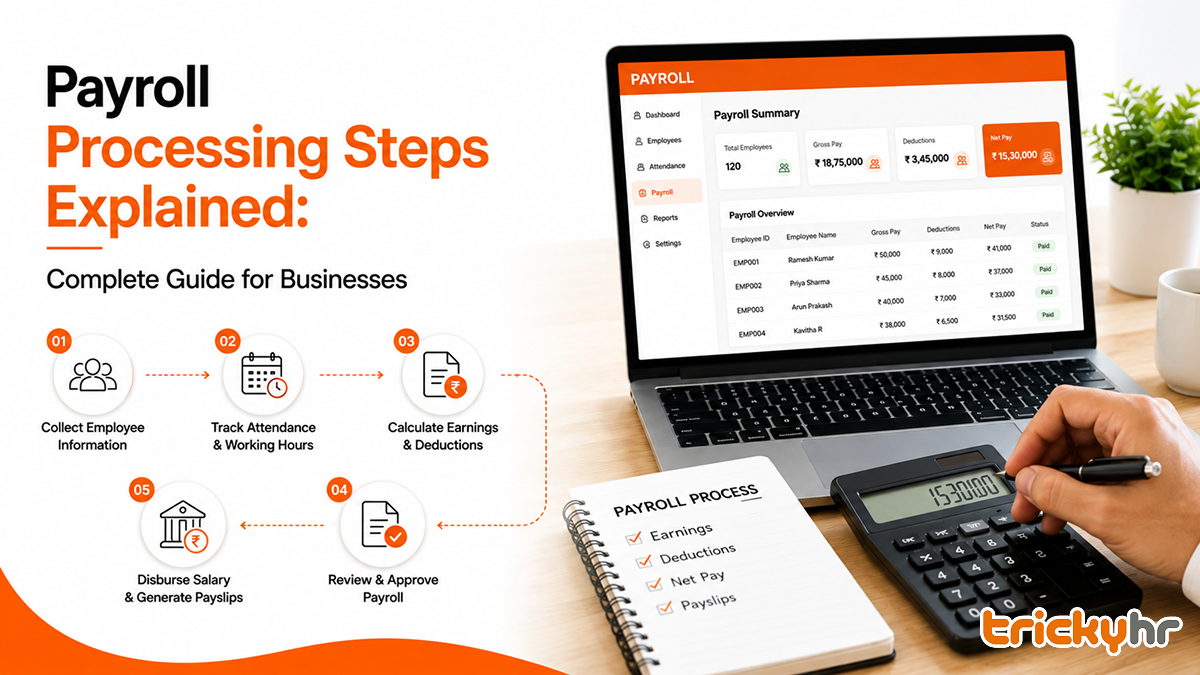
Payroll Processing Steps Explained: Complete Guide for Businesses
Payroll is one of the most important functions in any organization. Employees expect accurate and timely salary payments...
Read More
Device Management System India by TrickyHR – Reliable Attendance Control Across India
Companies operating multiple locations face challenges in attendance control. TrickyHR offers a complete Device Manageme...