


Published
08-06-2026
Payroll Processing Steps Explained: Complete Guide for Businesses
Payroll is one of the most important functions in any organization. Employees expect accurate and timely salary payments, while businesses must ensure compliance with tax regulations and labor laws. However, managing payroll manually can be time-consuming and prone to errors.
This is why many organizations are adopting payroll software in Chennai and across Tamil Nadu to automate payroll processing and improve accuracy. A well-structured payroll system helps businesses manage salaries, deductions, compliance requirements, and employee records efficiently.
In this guide, we explain the complete payroll processing steps and how businesses can streamline payroll management using modern software solutions.
What is Payroll Processing?
Payroll processing is the process of calculating employee salaries, deductions, taxes, bonuses, and other payments before disbursing salaries.
Payroll management involves:
· Employee salary calculation
· Attendance and leave tracking
· Tax deductions
· PF and ESI calculations
· Bonus and incentive processing
· Payslip generation
· Salary disbursement
A reliable payroll software in Tamil Nadu helps automate these activities and reduces the risk of payroll errors.
Why Payroll Processing is Important
Accurate payroll processing helps businesses:
· Ensure timely salary payments
· Maintain employee satisfaction
· Comply with government regulations
· Reduce payroll errors
· Improve financial planning
· Maintain payroll records
Payroll errors can negatively impact employee trust and lead to compliance issues. Therefore, businesses should establish a structured payroll process.
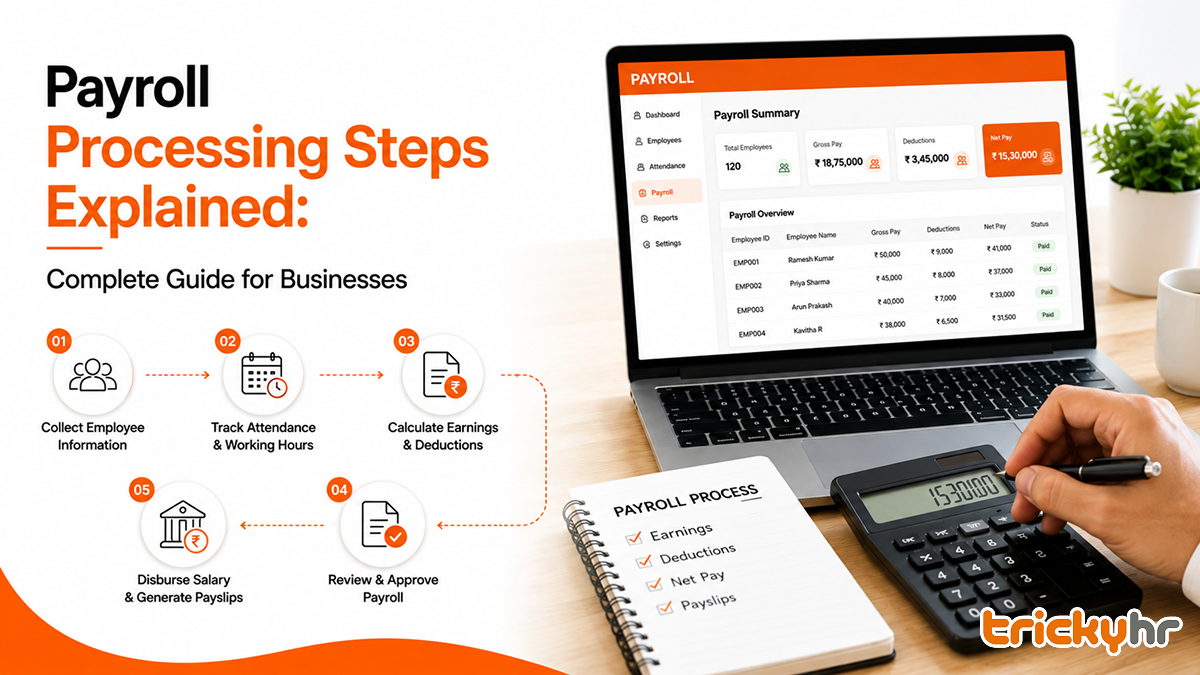
Step 1: Collect Employee Information
The first step in payroll processing is collecting employee information.
This includes:
· Employee name
· Employee ID
· Department
· Salary structure
· Bank account details
· Tax information
· PF and ESI details
Maintaining accurate employee information is essential for smooth payroll operations.
Modern HRMS software stores employee information in a centralized database, making payroll processing easier.
Step 2: Track Employee Attendance
Attendance plays a critical role in salary calculations.
Businesses must track:
· Working days
· Absences
· Leave records
· Overtime hours
· Shift schedules
Using attendance management software integrated with payroll software eliminates manual calculations and improves payroll accuracy.
Automated attendance systems ensure real-time data synchronization for salary processing.
Step 3: Calculate Gross Salary
Once attendance data is available, businesses calculate the employee's gross salary.
Gross salary may include:
· Basic salary
· House Rent Allowance (HRA)
· Conveyance allowance
· Medical allowance
· Special allowances
· Incentives and bonuses
Gross salary forms the basis for payroll calculations.
Step 4: Process Statutory Deductions
Payroll processing requires businesses to calculate mandatory deductions.
Common deductions include:
Provident Fund (PF)
Employers must deduct PF contributions according to government regulations.
Employee State Insurance (ESI)
Applicable organizations must calculate and deduct ESI contributions.
Professional Tax
Professional tax deductions vary by state regulations.
Income Tax (TDS)
Tax Deducted at Source (TDS) is calculated based on employee income and tax declarations.
A reliable payroll management software automatically calculates statutory deductions and ensures compliance.
Step 5: Calculate Net Salary
After adding earnings and deducting taxes and statutory contributions, businesses calculate net salary.
Formula:
Net Salary = Gross Salary – Total Deductions
Net salary represents the final amount credited to the employee's account.
Automated payroll systems perform these calculations accurately and reduce payroll discrepancies.
Step 6: Generate Payslips
Payslips provide employees with detailed salary information.
A standard payslip includes:
· Employee details
· Salary components
· Attendance information
· Tax deductions
· PF and ESI deductions
· Net salary
Payroll software automatically generates professional payslips and makes them available through employee self-service portals.
Step 7: Salary Disbursement
After payroll approval, salaries are transferred to employee bank accounts.
Businesses should ensure:
· Accurate bank information
· Timely salary transfers
· Proper payroll approval workflow
Automated salary processing improves efficiency and reduces administrative workload.
Step 8: Maintain Payroll Records
Payroll records should be maintained for future reference and compliance purposes.
Organizations must store:
· Salary registers
· Payslips
· Tax reports
· Attendance records
· Employee payroll history
Digital payroll systems simplify record management and improve data security.
Common Payroll Challenges
Many businesses face payroll-related challenges such as:
Manual Calculation Errors
Human errors can lead to incorrect salary calculations.
Attendance Discrepancies
Inaccurate attendance records can affect payroll accuracy.
Compliance Risks
Failure to comply with tax and labor regulations can result in penalties.
Time-Consuming Processes
Manual payroll processing requires significant administrative effort.
Data Management Issues
Managing employee payroll records manually can become difficult as businesses grow.
How Payroll Software Simplifies Payroll Processing
Modern payroll software in Chennai helps businesses automate payroll operations.
Key benefits include:
· Automated salary calculations
· Attendance integration
· Tax compliance management
· PF and ESI automation
· Instant payslip generation
· Real-time payroll reports
· Employee self-service access
By implementing payroll software, businesses can improve accuracy, efficiency, and compliance.
Why Businesses in Tamil Nadu Are Adopting Payroll Software
Organizations across Tamil Nadu are increasingly adopting digital payroll solutions to manage workforce operations efficiently.
Reasons include:
· Growing workforce size
· Increased compliance requirements
· Need for payroll automation
· Reduced administrative burden
· Better employee experience
Businesses looking for reliable payroll software in Tamil Nadu are choosing integrated HR and payroll systems to streamline operations.
Why Choose TrickyHR?
TrickyHR provides comprehensive payroll and HR management solutions designed for modern businesses.
Features include:
· Payroll automation
· Attendance integration
· Employee management system
· Leave management
· Compliance tracking
· Reporting and analytics
The platform helps organizations simplify payroll operations while improving workforce management.
Conclusion
Payroll processing is a critical business function that directly impacts employee satisfaction and organizational compliance. Following a structured payroll process ensures accurate salary calculations, timely payments, and proper record management.
Businesses that implement payroll software in Chennai can automate payroll activities, reduce errors, and improve operational efficiency. As organizations continue to grow, investing in payroll automation becomes essential for long-term success.
Our Blogs
Latest articles and updates from our team.

Leave Management Software: Simplifying Employee Leave Tracking
Managing employee leave manually can quickly become complicated as organizations grow. Tracking different types of leave...
Read More
Top Benefits of Using HRMS Software for Growing Companies
As businesses grow, managing employees becomes increasingly complex. Tasks such as payroll processing, attendance tracki...
Read More
How Payroll Automation Helps Businesses Save Time and Reduce Errors
Payroll is one of the most important responsibilities of any organization. Employees expect accurate salaries, timely pa...