


Published
07-07-2026
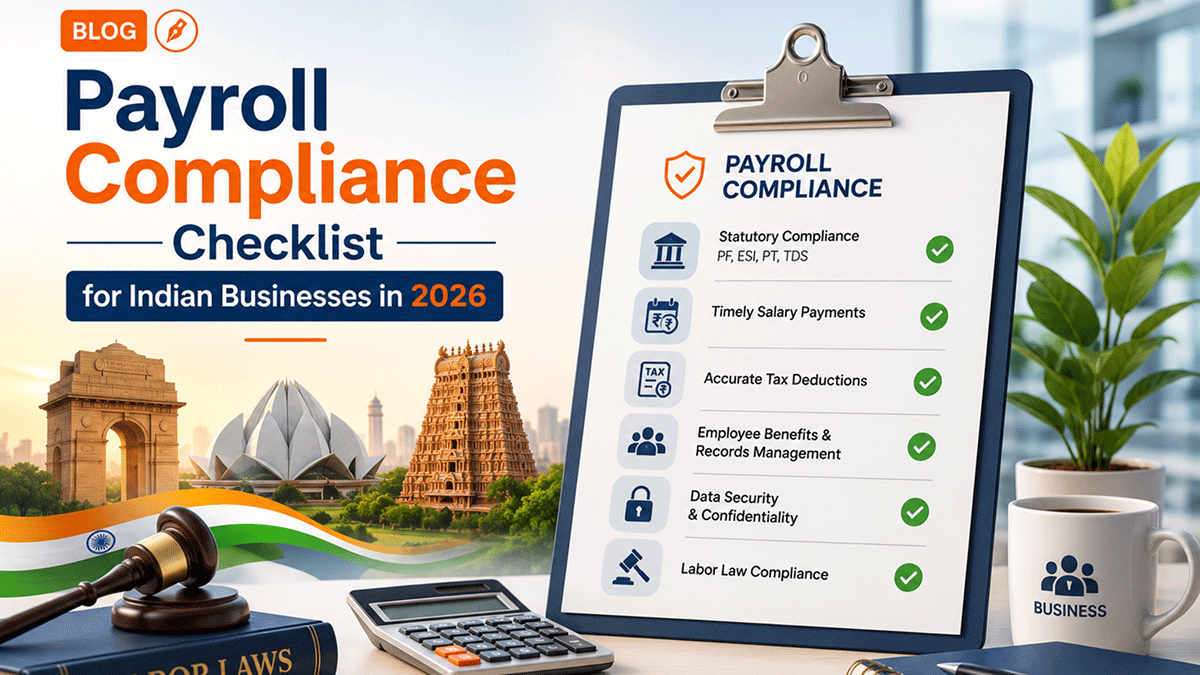
Employee Payroll Compliance Checklist for Indian Businesses
Payroll compliance is one of the most important responsibilities for every business. Regardless of company size, organizations must ensure that employee salaries, statutory deductions, tax filings, and labor law requirements are managed accurately and on time.
Failure to comply with payroll regulations can result in penalties, legal complications, employee dissatisfaction, and financial losses. This is why many organizations are adopting Payroll Software in Chennai and across Tamil Nadu to automate compliance management and reduce risks.
In this blog, we provide a comprehensive payroll compliance checklist that every Indian business should follow to maintain accurate payroll operations and stay compliant with statutory requirements.
What is Payroll Compliance?
Payroll compliance refers to following all government regulations, labor laws, and statutory requirements related to employee salary processing and payroll management.
Payroll compliance includes:
· Salary processing
· Tax deductions
· Provident Fund (PF)
· Employee State Insurance (ESI)
· Professional Tax (PT)
· Labour law compliance
· Employee records maintenance
· Payslip generation
Businesses must ensure these activities are performed accurately and within prescribed deadlines.
Why Payroll Compliance is Important
Payroll compliance helps businesses:
· Avoid legal penalties
· Ensure employee satisfaction
· Maintain accurate payroll records
· Build employee trust
· Improve financial transparency
· Reduce compliance risks
Non-compliance can negatively impact business operations and company reputation.
Payroll Compliance Checklist for Indian Businesses
1. Maintain Accurate Employee Records
The first step toward payroll compliance is maintaining accurate employee information.
Employee records should include:
· Employee Name
· Employee ID
· PAN Number
· Aadhaar Details
· Bank Account Information
· Salary Structure
· Joining Date
· Employment Documents
Businesses using an Employee Management System can centralize employee records and simplify compliance management.
2. Define Salary Structure Clearly
Every organization should maintain a well-defined salary structure.
The salary structure should include:
· Basic Salary
· House Rent Allowance (HRA)
· Conveyance Allowance
· Special Allowances
· Incentives
· Bonus Components
A clear salary structure improves payroll accuracy and simplifies statutory calculations.
3. Ensure Attendance Accuracy
Attendance directly impacts salary calculations.
Organizations should verify:
· Working Days
· Leave Records
· Overtime Hours
· Shift Details
· Holiday Records
Using Attendance Management Software helps businesses automate attendance tracking and improve payroll accuracy.
4. Verify Leave Management Records
Leave management plays a critical role in payroll compliance.
Businesses should:
· Track employee leave balances
· Monitor leave approvals
· Calculate leave deductions correctly
· Maintain leave records
Integrated leave management systems help prevent payroll discrepancies.
5. Process Provident Fund (PF) Contributions
Provident Fund compliance is mandatory for eligible organizations.
Businesses must:
· Calculate PF contributions correctly
· Deduct employee PF contributions
· Deposit PF amounts on time
· File PF returns as required
Automated payroll systems simplify PF calculations and reporting.
6. Process Employee State Insurance (ESI)
Organizations covered under ESI regulations must:
· Register eligible employees
· Calculate ESI contributions
· Deduct employee contributions
· Deposit payments before deadlines
Proper ESI management helps avoid compliance violations.
7. Manage Professional Tax (PT)
Professional Tax regulations vary by state.
Businesses should:
· Identify applicable PT rules
· Calculate deductions accurately
· Deposit taxes on time
· Maintain PT records
Payroll software can automate Professional Tax calculations and compliance tracking.
8. Calculate Income Tax (TDS) Correctly
Tax Deducted at Source (TDS) must be processed accurately.
Businesses should:
· Collect employee tax declarations
· Verify investment proofs
· Calculate taxable income
· Deduct TDS correctly
· Issue Form 16
Proper tax management helps avoid employee grievances and compliance issues.
9. Generate Employee Payslips
Every payroll cycle should include payslip generation.
Payslips should contain:
· Employee Information
· Salary Components
· Deductions
· PF Contributions
· ESI Contributions
· Net Salary
Automated payslip generation improves transparency and employee satisfaction.
10. Maintain Payroll Records
Businesses should maintain payroll records for future reference and audits.
Important records include:
· Payroll Registers
· Salary Statements
· Tax Reports
· Attendance Records
· Compliance Reports
Digital record management simplifies audits and compliance reviews.
11. Follow Payroll Processing Deadlines
Late payroll processing can impact employee trust and create compliance challenges.
Organizations should establish clear timelines for:
· Attendance Finalization
· Payroll Processing
· Salary Approval
· Salary Disbursement
· Compliance Filing
A structured payroll calendar improves operational efficiency.
12. Conduct Regular Payroll Audits
Payroll audits help identify:
· Calculation errors
· Compliance gaps
· Data inconsistencies
· Payroll inefficiencies
Regular audits improve payroll accuracy and reduce compliance risks.
Common Payroll Compliance Mistakes
Many businesses face compliance challenges due to:
Incorrect Employee Data
Outdated employee information often causes payroll errors.
Delayed Compliance Payments
Missing statutory deadlines can result in penalties.
Attendance Discrepancies
Incorrect attendance records affect salary calculations.
Tax Calculation Errors
Improper TDS calculations create compliance risks.
Poor Documentation
Missing payroll records can complicate audits and inspections.
How Payroll Software Simplifies Compliance
Modern Payroll Software in Chennai helps businesses automate payroll compliance through:
· Automated salary calculations
· Attendance integration
· PF and ESI management
· Professional Tax processing
· TDS calculations
· Payslip generation
· Compliance reporting
Automation reduces manual effort and improves payroll accuracy.
Why Businesses Are Adopting Payroll Software
Organizations across Tamil Nadu are increasingly investing in Payroll Software in Tamil Nadu because it helps:
· Improve compliance management
· Reduce payroll errors
· Save administrative time
· Improve employee satisfaction
· Ensure accurate salary processing
Payroll automation allows businesses to focus on growth while minimizing compliance risks.
Why Choose TrickyHR?
TrickyHR offers a complete payroll management solution designed for businesses across India.
Key features include:
· Payroll Processing Automation
· Attendance Integration
· Leave Management
· Employee Management System
· Compliance Tracking
· Payslip Generation
· Payroll Reports
The platform helps organizations simplify payroll compliance while improving efficiency and accuracy.
Conclusion
Payroll compliance is essential for maintaining smooth business operations and avoiding legal complications. By following a structured payroll compliance checklist, businesses can improve payroll accuracy, maintain employee trust, and ensure regulatory compliance.
Organizations implementing Payroll Software in Chennai and Payroll Software in Tamil Nadu can automate payroll activities, simplify compliance management, and create a more efficient workforce management process.
A strong payroll compliance strategy not only protects the business but also contributes to long-term organizational success.
Our Blogs
Latest articles and updates from our team.
How HR Management Software Helps Reduce Payroll Errors
Payroll errors are one of the most common challenges faced by growing businesses. Incorrect salary calculations, attenda...
Read More
HR Automation: How It Improves Business Efficiency
In today's competitive business environment, organizations are constantly looking for ways to improve productivity, redu...
Read More
How to Choose the Right HR Management Software for Your Business in 2025
In today’s fast-changing business environment, managing employees manually is no longer practical. As companies grow, HR...