


Published
30-03-2026
Biometric Attendance vs Manual Attendance: Which Is Better for Businesses?
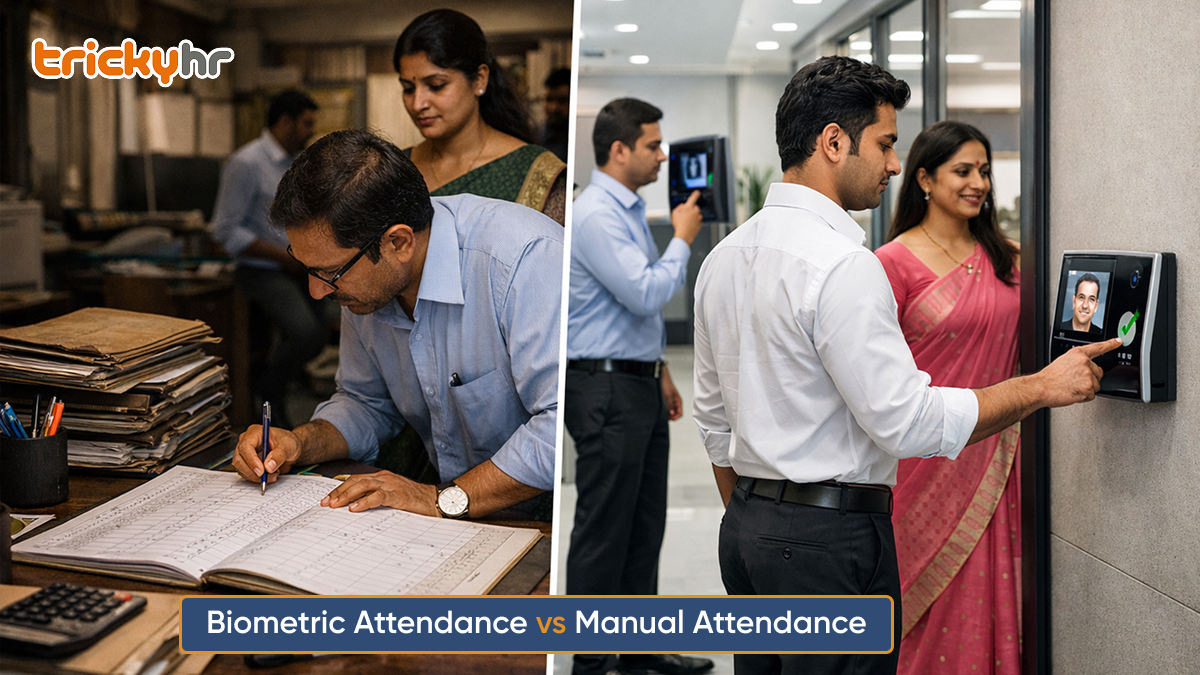
Employee attendance tracking plays an important role in workforce management. Accurate attendance records help businesses calculate salaries correctly, monitor employee productivity, and maintain operational discipline. Traditionally, many companies used manual attendance methods such as registers or spreadsheets. However, with the advancement of technology, organizations are now adopting biometric attendance systems and attendance management software. In this blog, we compare biometric attendance vs manual attendance to understand which system is better for businesses.
What Is Manual Attendance?
Manual attendance refers to traditional methods of tracking employee attendance using physical registers, spreadsheets, or manual entries.
Common manual attendance methods include:
- Signing attendance registers
- Recording attendance in spreadsheets
- Manual shift tracking
- Paper-based attendance records
While manual attendance may work for small teams, it becomes inefficient as organizations grow.
What Is Biometric Attendance?
Biometric attendance systems use biometric technologies such as fingerprint scanning, facial recognition, or iris scanning to record employee attendance automatically.
These systems are usually integrated with attendance management software or HR management software, allowing businesses to track employee working hours accurately.
Key Differences Between Biometric and Manual Attendance
1️Accuracy of Attendance Data
Manual Attendance
Manual attendance systems are prone to human errors. Employees may forget to mark attendance or incorrect entries may occur.
Biometric Attendance
Biometric systems automatically capture attendance data using biometric verification, ensuring accurate records.
2️Time Tracking
Manual Attendance
Tracking employee working hours manually is difficult and time-consuming.
Biometric Attendance
Biometric systems record exact login and logout times, helping businesses monitor employee work hours effectively.
3️Payroll Integration
Manual Attendance
Manual attendance data must be manually transferred to payroll systems, increasing the risk of salary calculation errors.
Biometric Attendance
Biometric attendance integrates directly with payroll and HR management software, ensuring accurate payroll calculations.
4️Employee Accountability
Manual Attendance
Manual systems may allow proxy attendance, where one employee signs for another.
Biometric Attendance
Biometric systems eliminate proxy attendance because biometric data such as fingerprints or facial recognition is unique to each employee.
5️Efficiency for HR Teams
Manual Attendance
HR teams spend significant time managing attendance records and verifying data.
Biometric Attendance
Automated attendance systems reduce administrative workload and allow HR teams to focus on strategic tasks.
Benefits of Biometric Attendance Systems
Implementing biometric attendance solutions offers several advantages:
- Accurate attendance tracking
- Reduced payroll discrepancies
- Prevention of proxy attendance
- Improved workforce discipline
- Seamless integration with HR systems
Businesses using attendance management software can automate attendance tracking and improve workforce transparency.
When Manual Attendance May Still Be Used
Despite its limitations, manual attendance may still be used in situations such as:
- Very small businesses with few employees
- Temporary or project-based teams
- Organizations without digital infrastructure
However, most growing companies prefer automated attendance systems.
Why Businesses Are Moving to Biometric Attendance Systems
As companies grow, workforce management becomes more complex. Biometric attendance systems provide accurate attendance records, automated payroll integration, and better workforce visibility.
Modern HRMS software for companies integrates biometric attendance with payroll, leave management, and employee management modules to streamline HR operations.
Conclusion
Both manual and biometric attendance systems have their place in workforce management. However, for growing organizations, biometric attendance systems offer greater accuracy, efficiency, and security.
By adopting modern attendance management software, businesses can automate attendance tracking, reduce payroll errors, and improve overall workforce productivity.
Our Blogs
Latest articles and updates from our team.
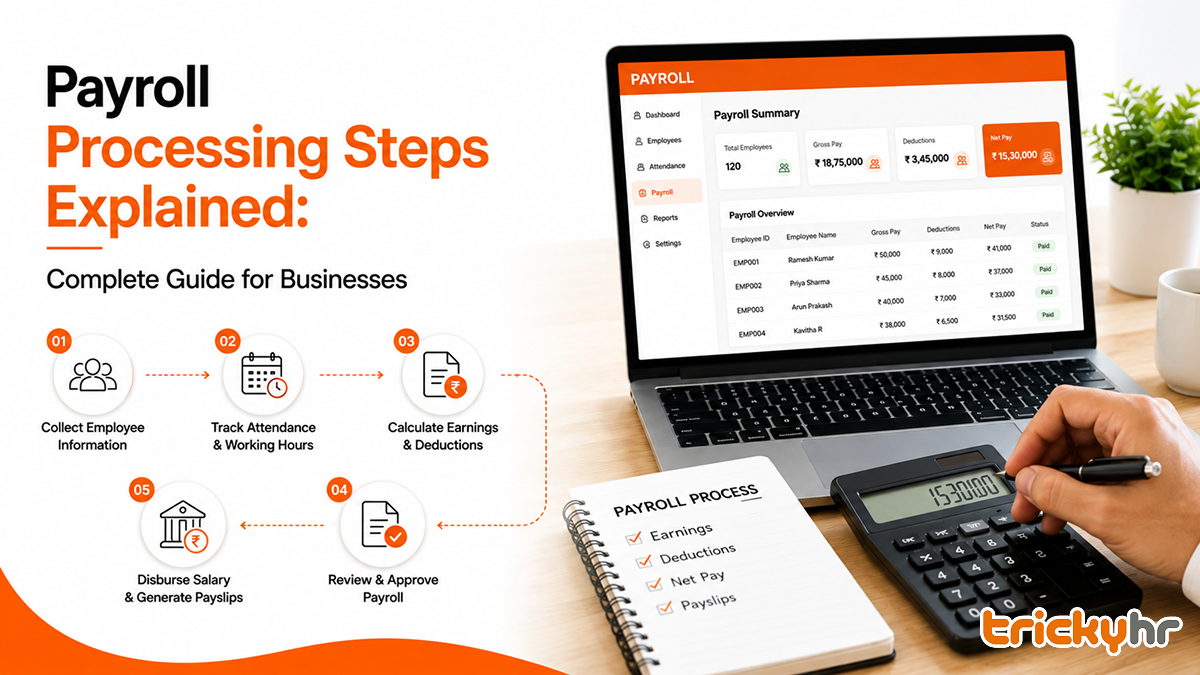
Payroll Processing Steps Explained: Complete Guide for Businesses
Payroll is one of the most important functions in any organization. Employees expect accurate and timely salary payments...
Read More

Best HR Management Software in Chennai for Small Businesses
Managing employees effectively is one of the biggest challenges for small businesses. As organizations grow, handling at...
Read More
Cloud-Based Payroll Software for Growing Companies
As businesses grow, managing payroll becomes increasingly complex. Companies must handle salary calculations, statutory...